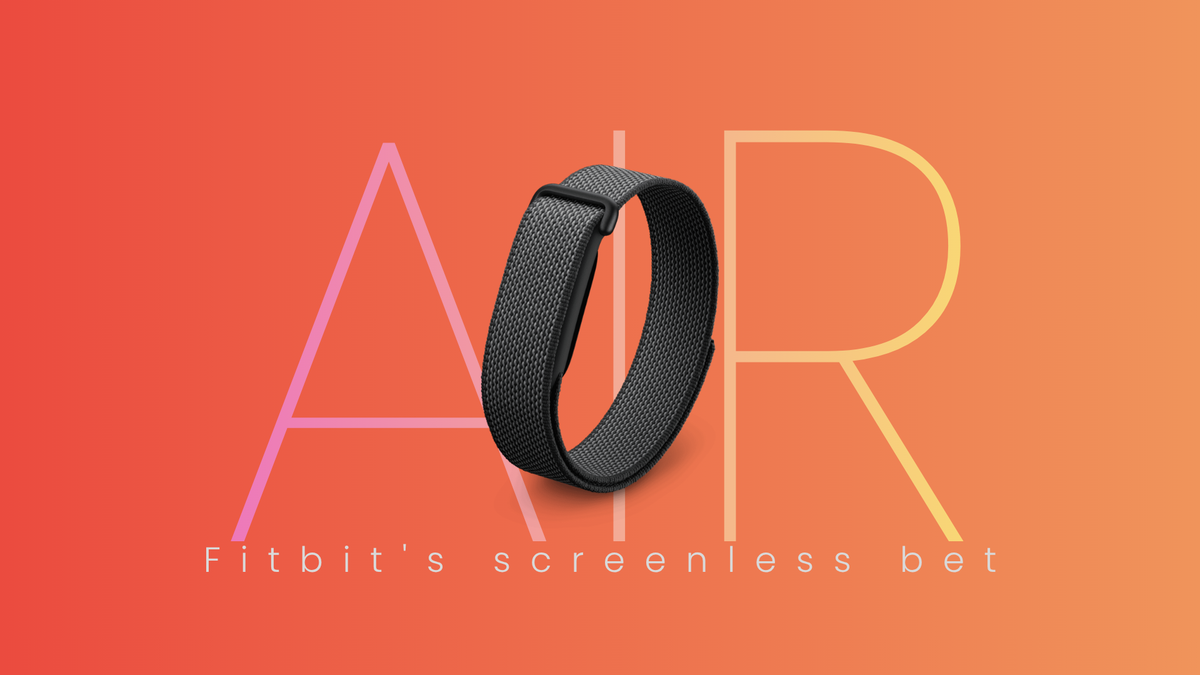
Google Fitbit Air Is Here — A Screenless Tracker That Wants to Replace Your Smartwatch
May 7, 2026
Google just launched something that feels almost counter-intuitive in 2026 — a fitness tracker with no screen. No notifications. No glowing display on your wrist demanding your attention. Just quiet, continuous health monitoring that gets out of your way.
The Fitbit Air launched today and it's one of the more interesting wearables in a long time. Here's everything you need to know.
What Is the Fitbit Air
Google unveiled the Fitbit Air as a screen less wearable aimed at people who find wearable devices too bulky, complicated, or expensive — describing it as "simple, affordable and comfortable enough to wear 24/7."
All the technology fits into a pill-shaped pebble made of plastic that can be easily removed from the band. The pebble weighs 5.2 grams, while the entire setup with band comes in at 12 grams.
The idea is simple: you stop staring at your wrist and start living your life. Your health data syncs silently to your phone in the background.
What It Tracks
The Fitbit Air includes 24/7 heart rate monitoring, heart rhythm monitoring with AFib alerts, blood oxygen level, resting heart rate, heart rate variability, sleep stages and duration, and more.
The 24/7 heart rate tracking also powers above and below range notifications, irregular heart rhythm notifications for AFib, and heart rate variability monitoring. There's also Bluetooth 5.0 and a vibration motor for silent Smart Wake alarms.
Since there's no screen, there is automatic activity tracking, or you can start workouts from your phone and manually log exercise in the Google Health app after the fact.
Battery Life and Charging
Battery life stretches to seven days and fast charging adds enough power for a full day of use in just five minutes.
You can go from 0 to 100 percent in 90 minutes, with a new pill-shaped magnetic charger that is bidirectional and uses USB-C. The device is also water resistant up to 50 meters.
Seven days between charges with five minute top-ups is genuinely practical for daily wear, especially compared to most smartwatches that need nightly charging.
The AI Side — Google Health Coach
This is where it gets interesting. The more important part of this launch may actually be the software side. Google is rebranding the Fitbit app and Fitbit Premium into something called Google Health, with a redesigned app experience built around Google Health Coach — an AI assistant powered by Gemini.
Google Health Coach can help with tasks like creating custom workout routines based on your goals and available equipment, analyzing sleep habits, and more. It is available for Google Health Premium subscribers.
In some regions, users may even be able to connect medical records into the system, giving Google a much larger pool of data to work with than traditional fitness platforms typically use.
Subscription — What's Free and What Isn't
One concern with trackers like this is the subscription trap. Fitbit Air still works without a subscription. Buyers get three months of Google Health Premium included, but the tracker does not become useless once that expires — a notable difference from WHOOP, where the hardware is tied tightly to the membership model. The subscription layer mainly unlocks the AI coaching side of the platform.
That's a reasonable model. You get a useful tracker out of the box and pay more only if you want the Gemini-powered coaching layer on top.
Bands and Pricing
The Fitbit Air starts at $99.99. In the box you get the Performance Loop band made of textile with a stainless steel buckle. Google also offers a sweat-proof Active Sport band made of silicone for $34.99 and an Elevated Modern band made of polyurethane for $49.99, designed to turn the Fitbit Air into a fashionable bracelet.
There is also a Stephen Curry Special Edition for $129.99, featuring a unique water-resistant coating and a raised interior print inspired by athletic racing stripes engineered to increase airflow during high-intensity movement.
How It Compares to WHOOP
The Fitbit Air puts Google much closer to competitors such as WHOOP and the growing category of screen less fitness wearables. But the key difference is price and the subscription model.
WHOOP requires an ongoing membership just to use the hardware. Fitbit Air at $99 with no mandatory subscription is a significantly lower barrier for anyone curious about screen less tracking who doesn't want to commit to another monthly fee.
Availability
The Google Fitbit Air is available for preorder now and goes on sale May 26, 2026. It supports both Android and iOS through the Google Health app.
With Google's platform, you can use the Fitbit Air and Pixel Watch at the same time, with Google automatically handling the switch between devices.
CONCLUSION
The Fitbit Air is a genuinely different kind of product from Google — restrained, minimal, and focused on doing one thing well. In a world where every device is fighting for your attention, a tracker that deliberately removes itself from that equation is a refreshing idea.
At $99 with no required subscription, it's worth serious consideration if you want continuous health data without another screen on your wrist. The Gemini-powered coaching adds a layer that could make it smarter over time, if Google delivers on that promise.
Pre-orders are open now. It will begin shipping on May 26, 2026.