NVIDIA RTX Spark: Run 120B LLMs Locally on Your Laptop
June 23, 2026
NVIDIA just made its biggest move into personal computing since the GPU era began. At Computex 2026, Jensen Huang unveiled RTX Spark — a superchip built specifically for AI agents running locally on Windows laptops and compact desktops. Not cloud-dependent. Not a demo. Shipping fall 2026 in 30+ devices.
The short version: it runs 120-billion-parameter LLMs locally with a 1-million-token context window. On a laptop thin enough to forget you're carrying.
What's Inside the RTX Spark Superchip
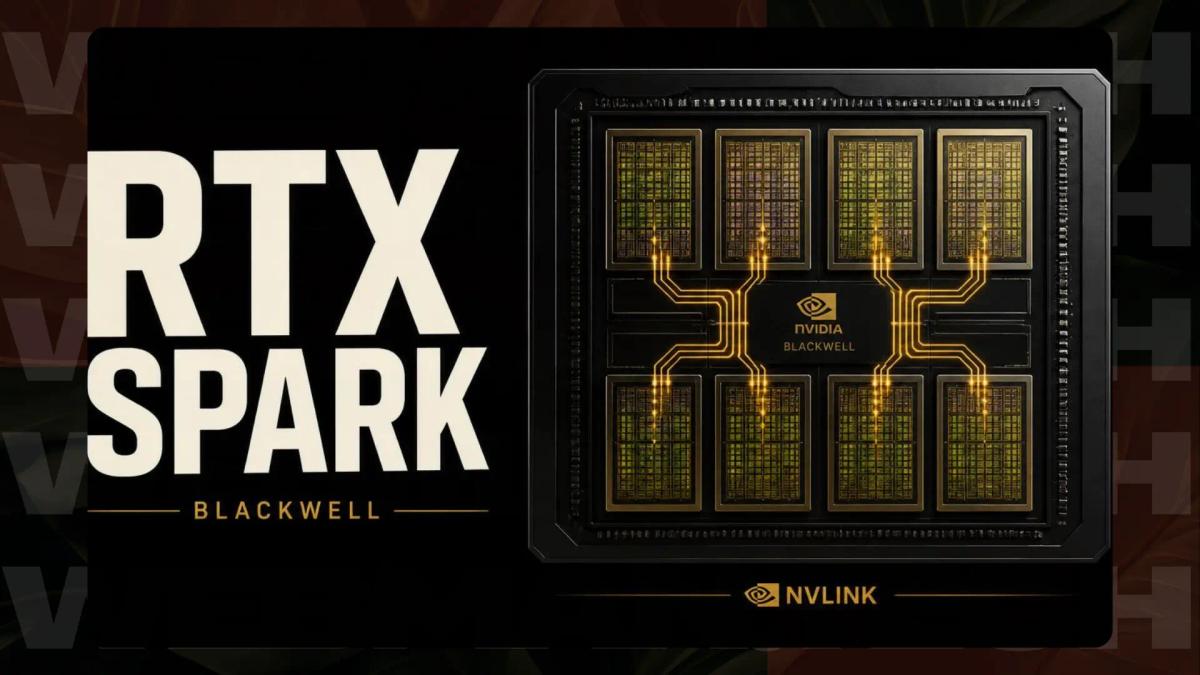
The RTX Spark Superchip combines a Blackwell GPU with 6,144 CUDA cores and fifth-generation Tensor Cores (FP4 precision), connected via NVLink C2C to a 20-core ARM CPU. The whole package gets up to 128GB of LPDDR5X unified memory at 300 GB/s bandwidth.
AI compute peaks at 1 petaflop. That's the number that makes running large models locally viable — Apple Silicon set the bar for unified memory architecture on a laptop, and RTX Spark is NVIDIA's direct answer with the full CUDA stack on top.
The chip is engineered for a 14mm chassis at under 3 pounds — laptop sizes from 14 to 16 inches, precision-machined aluminum, tandem OLED displays with G-SYNC.
Why 128GB Unified Memory Matters for Developers
The memory architecture is the real story here. Models run faster and stay coherent over longer sessions when the CPU and GPU share one large pool instead of copying data between separate VRAM and system RAM. This is exactly what makes Apple Silicon work so well for local inference.
NVIDIA says 128GB is enough to run a 120B-parameter model with a 1 million token context — meaning you could load a large codebase, a full document corpus, or a long agentic session without choking on context limits. On a laptop. Without a cloud API call.
For developers working with sensitive codebases, regulated data, or situations where you can't send data to a third-party API, this matters a lot. The alternative has been an expensive local workstation or tolerating cloud latency and data exposure.
NVIDIA OpenShell and Windows Agent Integration
NVIDIA and Microsoft are co-building NVIDIA OpenShell — a runtime that lets AI agents operate natively inside Windows on RTX Spark hardware with new OS-level security primitives. The idea is agents that can set goals, call tools, evaluate output, and refine work across apps without routing through the cloud.
CUDA runs natively on RTX Spark, so the entire NVIDIA software stack — TensorRT, DLSS, OptiX, Reflex — is available locally. That's the moat. Apple Silicon has unified memory but not CUDA. Snapdragon has efficiency but not the AI compute. RTX Spark is trying to own the intersection.
What Else It Does
Besides AI inference, NVIDIA positions RTX Spark as a creative and gaming chip: 100+ FPS at 1440p in modern AAA titles via DLSS 4.5, 12K 4:2:2 video editing, 90GB+ 3D scene rendering, and 4K AI video generation.
Adobe is rearchitecting Photoshop and Premiere from the ground up for RTX Spark to deliver 2x faster AI and graphics performance. That's not a plugin update — that's a full rebuild targeting this platform specifically.
Availability and Partners
Over 30 laptops and 10 desktops from Dell, HP, Lenovo, Asus, MSI, and Microsoft are confirmed for fall 2026. Microsoft's Surface Laptop Ultra is one of the first flagship devices built on RTX Spark from the silicon up. No pricing yet, but expect premium positioning — this is the high end of Windows laptops.
NVIDIA also committed to a multi-generation roadmap: Vera Rubin Spark (LPDDR6 memory) and Rosa Feynman Spark are already on the roadmap. This is a platform play, not a one-off chip.
The Context: Why Now
Enterprise teams are re-evaluating cloud AI costs after the tokenmaxxing blowouts of early 2026 — Uber burning its full annual AI budget in four months, Microsoft canceling Claude Code licenses over runaway token bills. Local inference with no per-token cost is a genuine alternative for workflows where the model fits in memory.
RTX Spark doesn't replace cloud AI. It offers a third option between "CPU laptop" and "cloud API" that didn't exist before at this scale: powerful enough to run frontier-tier models, portable enough to carry around, and fully offline if you need it.
If you've been watching the tokenmaxxing budget blowout reshape how enterprises think about AI tooling spend, local inference at this scale is the other side of that story.
Sources: NVIDIA Newsroom, NVIDIA GeForce Blog, Tom's Hardware, The Tech Marketer
Frequently Asked Questions
What is the NVIDIA RTX Spark Superchip?
RTX Spark is NVIDIA's new Windows on Arm superchip for laptops and compact desktops, combining a Blackwell GPU with 6,144 CUDA cores, a 20-core ARM CPU, and up to 128GB of unified LPDDR5X memory. It delivers 1 petaflop of AI compute and is designed to run AI agents and large language models locally without cloud dependency.
Can RTX Spark really run 120B parameter LLMs?
Yes, according to NVIDIA. The 128GB unified memory pool and 1 petaflop AI compute are designed to run 120-billion-parameter models with up to a 1 million token context window locally on the device.
When do RTX Spark laptops come out?
RTX Spark laptops and desktops are expected in fall 2026, with over 30 laptops from Dell, HP, Lenovo, Asus, MSI, and Microsoft confirmed. Microsoft's Surface Laptop Ultra is among the first confirmed RTX Spark devices.
How does RTX Spark compare to Apple Silicon for AI development?
Both use unified memory architectures that benefit local AI inference. RTX Spark's advantages are the full NVIDIA CUDA software stack (TensorRT, DLSS, and thousands of CUDA-accelerated apps), higher peak AI compute at 1 petaflop, and potentially larger memory configurations up to 128GB. Apple Silicon has a more mature local AI software ecosystem and longer battery life track record at this point.