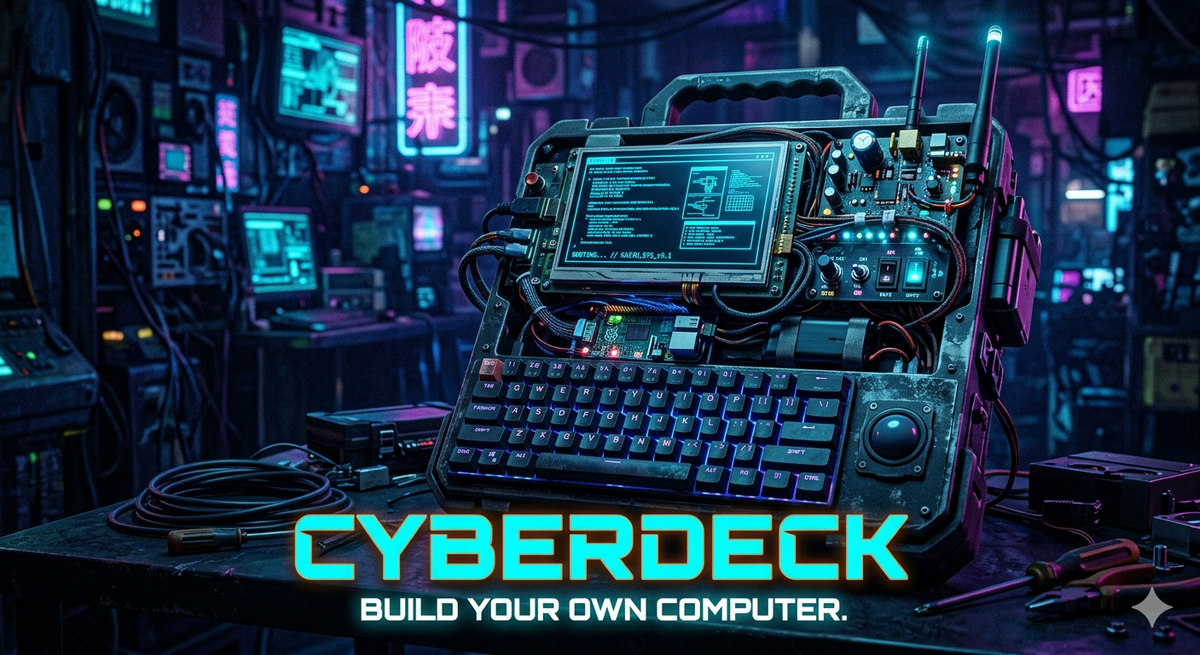
What Is a Cyberdeck? The DIY Computer Trend Hitting All-Time Highs in 2026
May 14, 2026
Somewhere between a hacker tool and a design object, a quiet revolution is happening on workbenches and TikTok feeds across the internet. People are building their own computers from scratch — not powerful gaming rigs, but small, purposeful, deeply personal machines called cyberdecks.
Search interest in cyberdecks just hit an all-time high in 2026. "Build a cyberdeck" and "single board computer" are both at record levels. And the people building them aren't just hardcore engineers — they're musicians, writers, students, and makers of every kind.
Here's everything you need to know.
What Is a Cyberdeck
A cyberdeck is a custom-built portable computer designed for specific tasks, often inspired by cyberpunk aesthetics and functionality. Unlike traditional laptops, cyberdecks are highly personalized and often built from scratch using components like Raspberry Pi, mechanical keyboards, and custom displays.
Unlike sleek commercial laptops designed to disappear, cyberdecks celebrate their mechanical nature. Exposed screws, visible wiring, industrial enclosures, and mechanical keyboards define the genre.
Think of it as the opposite of a MacBook. Where Apple removes every visible screw and hides every port, a cyberdeck puts everything on display — not because it has to, but because the builder wants it that way.
Where Did the Name Come From
The term "cyberdeck" comes from the 1984 novel Neuromancer by William Gibson. In the 1980s, the idea of a laptop was in its infancy — monitors, keyboards, and batteries were all large and cumbersome. In Gibson's seminal cyberpunk novel, characters carried around clunky portable desktops known as cyberdecks. These decks allowed the characters to access the "matrix," the sci-fi precursor to the internet.
Modern DIY cyberdeck builds translate that fictional aesthetic into functional hardware. The name stuck, and the community that grew around it on Reddit and Hackaday spent years refining the concept into something you can actually build in your living room.
What Can a Cyberdeck Do
This is the most searched question about cyberdecks right now — and the answer is more practical than you'd expect.
A cyberdeck is a compact, often rugged computing device built for specialized tasks such as coding, cybersecurity, or offline computing. It typically includes a small screen, input controls, battery system, and a computing unit like a Raspberry Pi or mini PC.
In practice, people are using cyberdecks for writing and journaling without internet distractions, coding and terminal work on the go, music production with custom MIDI setups, cybersecurity and penetration testing, reading with a distraction-free e-ink or small display setup, and offline computing in areas without reliable connectivity.
What makes them fascinating is not just their look, but the purpose-driven design behind each build. As more people seek control over their tech and data, cyberdecks are gaining serious attention.
Why Are They Trending Right Now
Cyberdecks are "quietly rebellious" and a "direct middle finger to the boring, minimalist everything-is-a-sleek-black-rectangle aesthetic that dominates tech design." They combat the unbounded corporatization, invasiveness and homogeneity of widespread tech, in addition to individualising the tech experience according to a user's aesthetic.
There's also a cultural shift happening. TikTok has helped turn the cyberdeck from a niche hacker build into something closer to a design object. Classic cyberdeck style leaned hard into rugged cyberpunk fantasy — Pelican cases, portable labs, wearable displays. What TikTok added was a new surface language: more colour, more decoration, more softness, and more interest in how the object feels in daily life.
On TikTok, a wild trend has exploded: custom cyberdecks built around Raspberry Pi. What started as a niche hacker hobby has gone mainstream, with the most unexpected demographics leading the charge — people turning old handbags, clamshell boxes, and random vintage cases into fully functional, offline mini-computers.
What You Need to Build One
The core components of almost every cyberdeck build:
The Brain — Single Board Computer Raspberry Pi is the most popular choice by far. The Pi 4 or Pi 5 gives you enough power for most tasks while staying compact and affordable. Alternative options include Orange Pi, Radxa Rock, or any mini PC if you want more processing power.
The Display Most builds use a 5-inch to 7-inch screen. A Raspberry Pi official touchscreen works out of the box. Waveshare makes affordable options in multiple sizes including e-ink displays for reading-focused builds.
The Input A compact mechanical keyboard is the most common choice. Many builders use 40% or 60% keyboards to save space. Bluetooth keyboards work if you want a cleaner build without cables.
The Enclosure This is where creativity takes over. Cyberdecks appear in wooden clamshells, 3D-printed shells, backpack frames, Pelican cases, vintage radio enclosures, and other handmade cases. If you have a 3D printer, you can design something completely custom. If not, Pelican cases and vintage electronics shells are popular starting points.
The Power A USB-C power bank handles most builds. Some builders wire in 18650 battery cells with a charging circuit for a more integrated solution.
Real Builds Worth Looking At
Evan Meaney's Raspberry Pi Crash Recovery Device is built for scenarios where an EMP has taken out computing infrastructure. The CRD uses a Pelican case lined with grounded copper to act as a Faraday cage. Inside the case, a mechanical keyboard is built into the lid. The front panel features a 7-inch touch screen, USB and network ports, switches for managing power, and a 12,000mAh battery rechargeable via portable solar panels.
When faced with a broken Amstrad PPC 640, one builder tore it apart and rebuilt it using modern parts, turning what was Amstrad's first portable IBM PC-compatible computer released in 1987 into a functional cyberdeck powered by Raspberry Pi 4.
Another builder created a multi-screen portable cyberdeck using three Raspberry Pis and six screens — and the entire thing folds up into a steampunk metal box you can carry around.
Where to Start if You're a Developer
If you're a developer curious about building your first cyberdeck, the simplest starting point is a Raspberry Pi 5, a 7-inch touchscreen, a compact Bluetooth keyboard, and a 3D printed or Pelican case enclosure. Load it with Raspberry Pi OS, set up your terminal environment, and you have a fully functional portable Linux machine that you built yourself.
The r/cyberdeck subreddit is the best community resource — thousands of builds, parts lists, and people happy to answer beginner questions. Hackaday is the other go-to for serious build documentation.
Total cost for a basic build sits around $150 to $250 depending on components. More elaborate builds with custom enclosures and larger screens can run $400 or more.
CONCLUSION
The cyberdeck trend makes complete sense in 2026. At a time when every laptop looks the same, every phone is a glass slab, and every piece of software is fighting for your attention, building your own purposeful machine from scratch is a genuinely radical act.
What started as a weekend project for many builders consumed months of iteration and redesign — resulting in machines that sit on workbenches as both functional tools and personal statements.
Whether you want a distraction-free writing machine, a portable coding terminal, or just something that looks nothing like anything Apple or Dell has ever made — a cyberdeck might be exactly what you need to build.